Atlantropa_Projekt
Germany was still striving for a so called ›Platz an der Sonne‹ (place in the sun) even after losing the colonies. This is where fantasies of the reforestation of the Sahara and its' use for agricultural purposes came from. This colonial utopia was surpassed only by the unprecedented ›Atlantropa Project‹. From the desire for African possessions, the idea was born to drain the Mediterranean Sea and to unite Africa and Europa into a large German continent called ›Eurafrica‹.
Text: Kien Nghi Ha: Der weiße Fleck und das Subjekt in: Mythen, Masken und Subjekte, Kritische Weißseinsforchung in Deutschland; Maureen Maisha Eggers, Grada Kilomba, Peggy Piesche, Susan Arndt (Hrsg.); Unrast Verlag 2. überarbeitete Auflage, 2009; S.111
Bild: Sofia Mintre
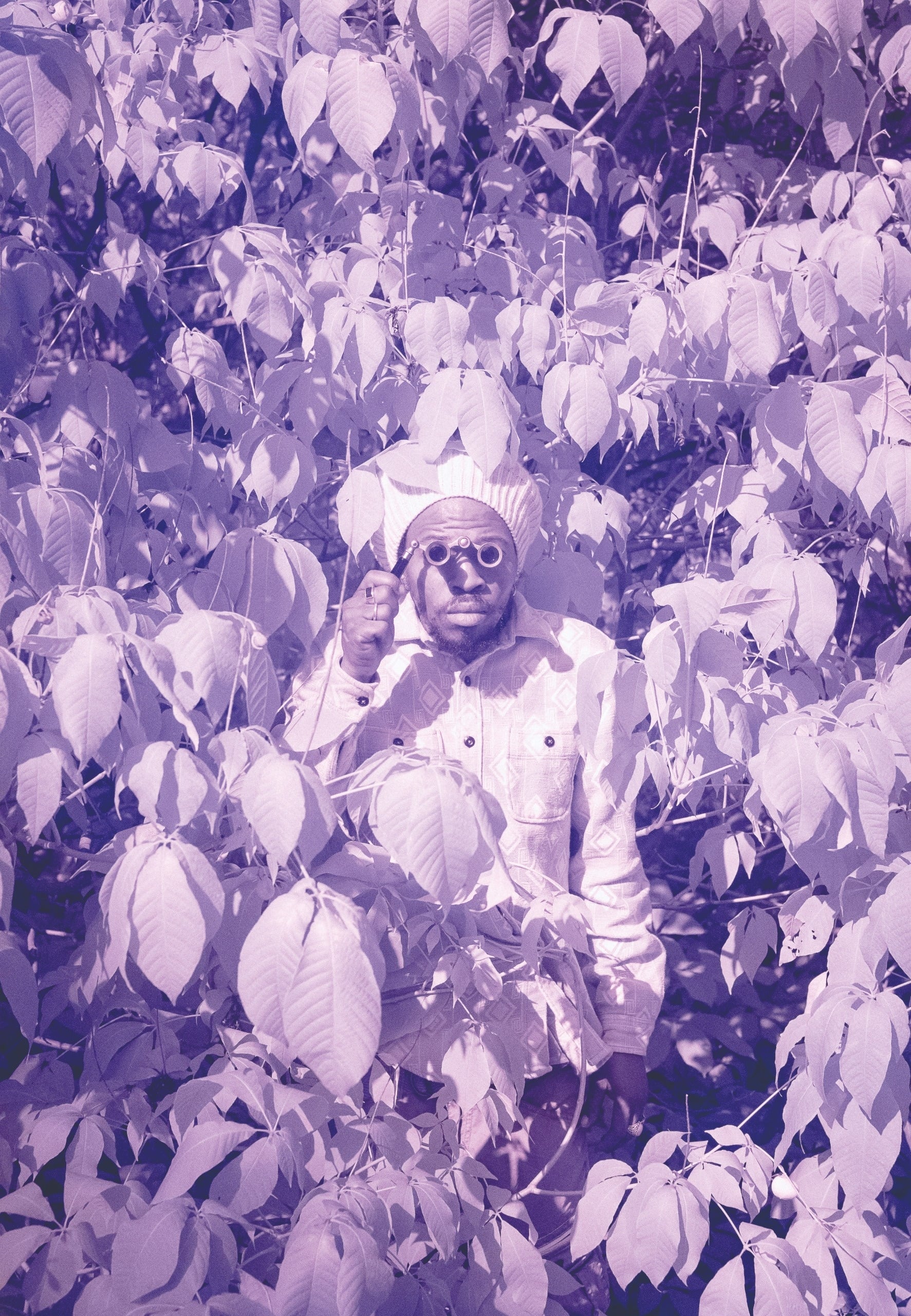
Counter_Gaze
The beginnings of the colonial exhibitions of showing »the Other«, particulary Africans, who were supposed to present themselves
as faithful colonial subjects in basque skirts with dance and song inserts, can be dated back to the late 17th century. At that time the Electorate of Brandenburg participated in the trans-
atlantic slave trade. In Treptower Park, Berlin, 106 people from different German colonies were stared at by millions of spectators. But the men, women and children from Oceania and Africa stared back. The Cameroonian Kwelle Ndumbe (Bismarck Bell) bought himself an opera glass for this very purpose.
Text: Vgl. Unbekannt, Hintergrund und Ausstellung: http://zurueckgeschaut.de/hintergrund-ausstellung, 2018
Bild: Sofia Mintre, inspiriert durch Zeichnung von Lena Ziyal, 2017
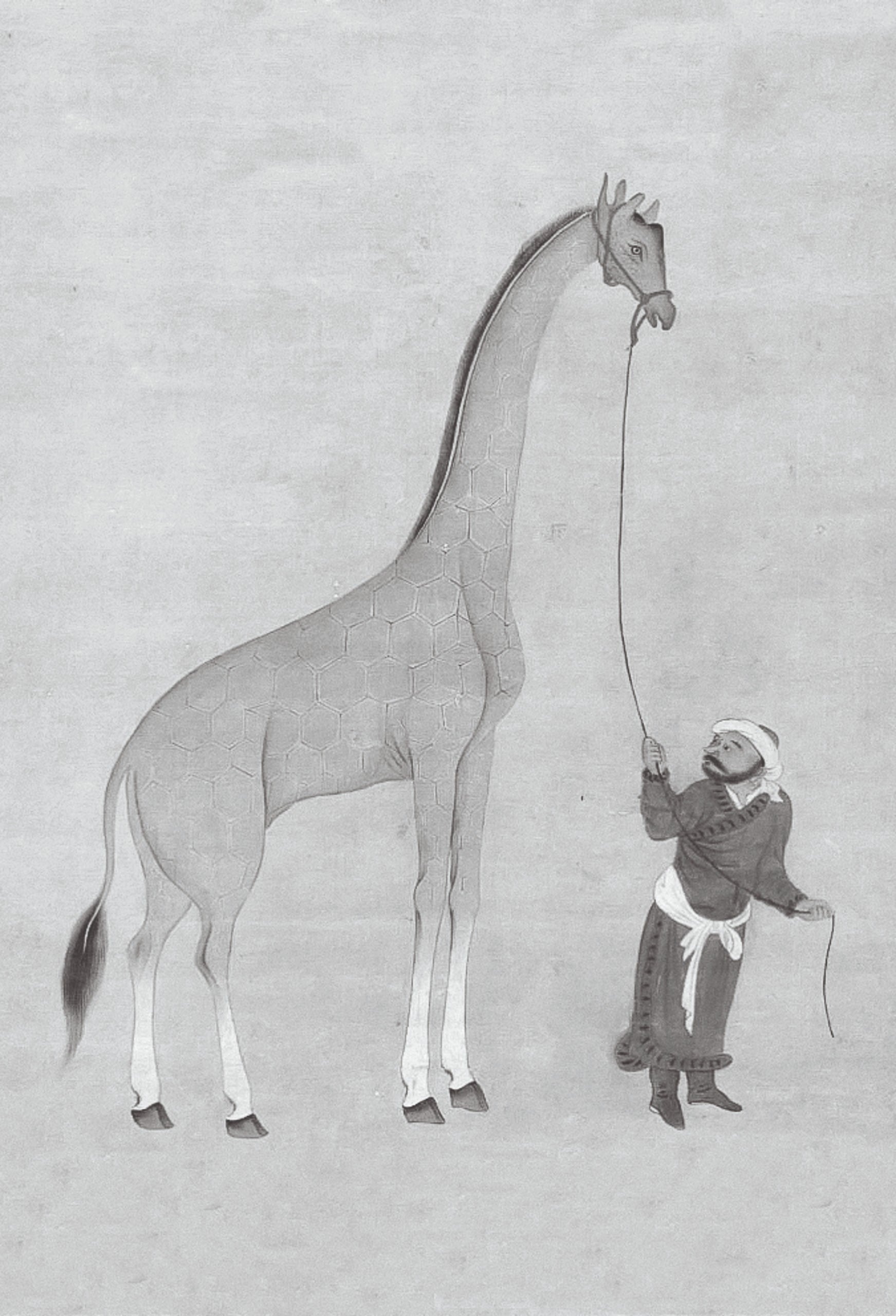
Chinese_Giraffe
The Shona of Zimbabwe exported mineral resources such as gold and copper and imported cotton, silk and porcelain from China via the East African port cities. They also exchanged ivory, medicine and giraffes (seen here: a gift from the King of Bengal to the Emperor of China, probably 1357-1434). Discoveries of Chinese
coins from the 15th century in East Africa prove the trade relations.
Text: Vgl. Gerson H. Jeute: Zur Frage einer Globalisierung im Mittelalter im Hinblick auftranskontinentale Verflechtungen, S.28; Lutz van Dijk: Afrika, Geschichte eines Kontinents; BpB; Schriftenreihe Band 1706, 2016, S. 87; Frei übersetzt: http://www.globalblackhistory.com/2018/01/zheng-first-chinese-africa.html
Bild: Vgl. http://factsanddetails.com/
china/cat2/4sub8/item45.html
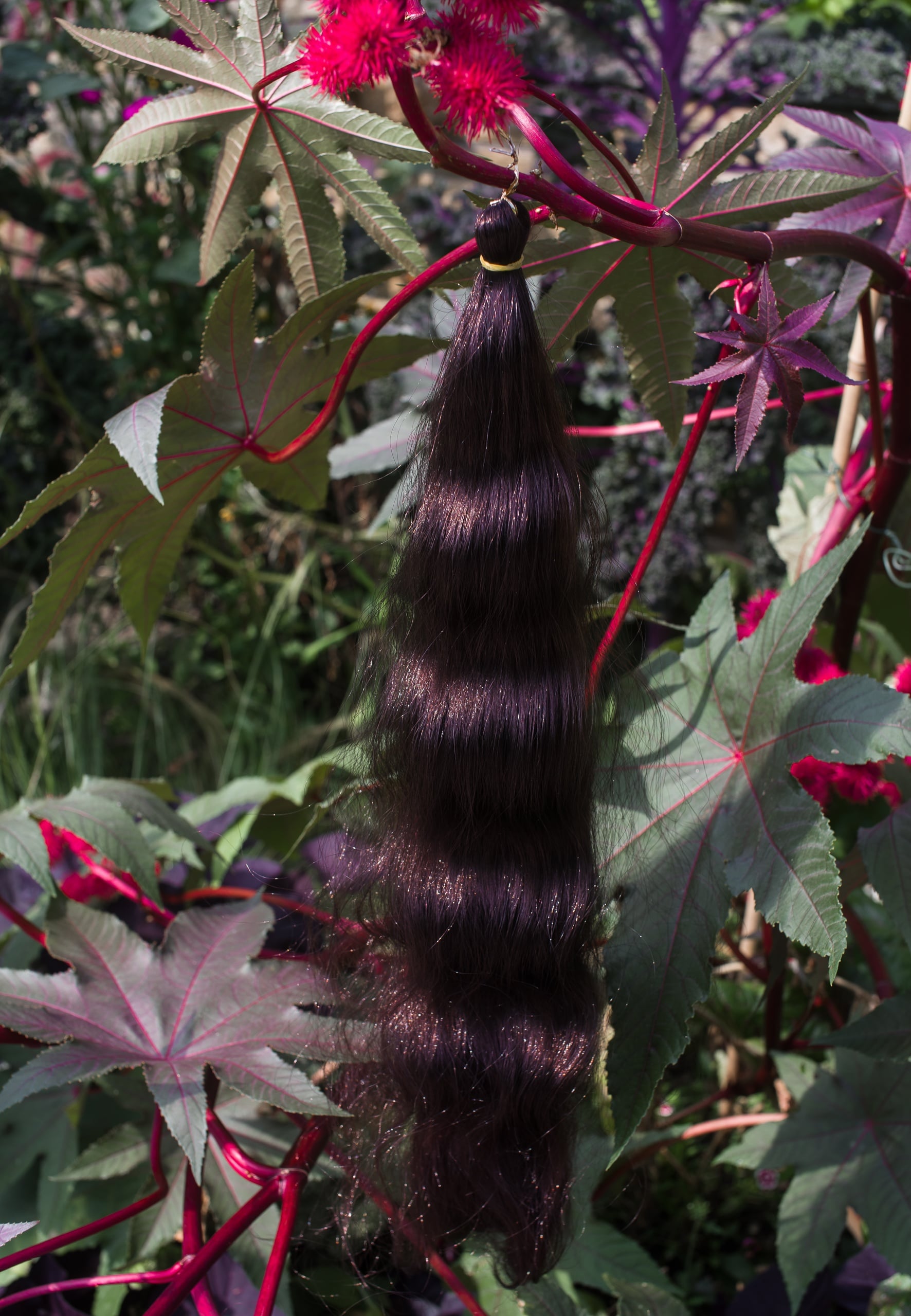
Straight_Hair
»I´ve often said that if Michelle Obama had natural hair, when Barack Obama was running for president, he would not have won.
Because her natural hair would have signified certain things to people – and those things are negative things. It would signify that she´s some sort of militant, Neo Black Panther, frightening, angry – angry in a bad way – because, of course, talking about gender, in some ways women are not allowed to be angry, particularly black women, so anger in a black woman is something that´s just a no-no. And I think it would somehow signify that she´s not mainstream, because we´ve decided that mainstream-hair is hair that sort of falls down. When you have hair that is natural and black, it stands up and is not considered mainstream.«
Text: Chimamanda Ngozi Adichie: Interview mit Channel 4. UK. (eigene Transkription) https://www.youtube.com/watch?v=74DECaug0Cs Bild: Sofia Mintre
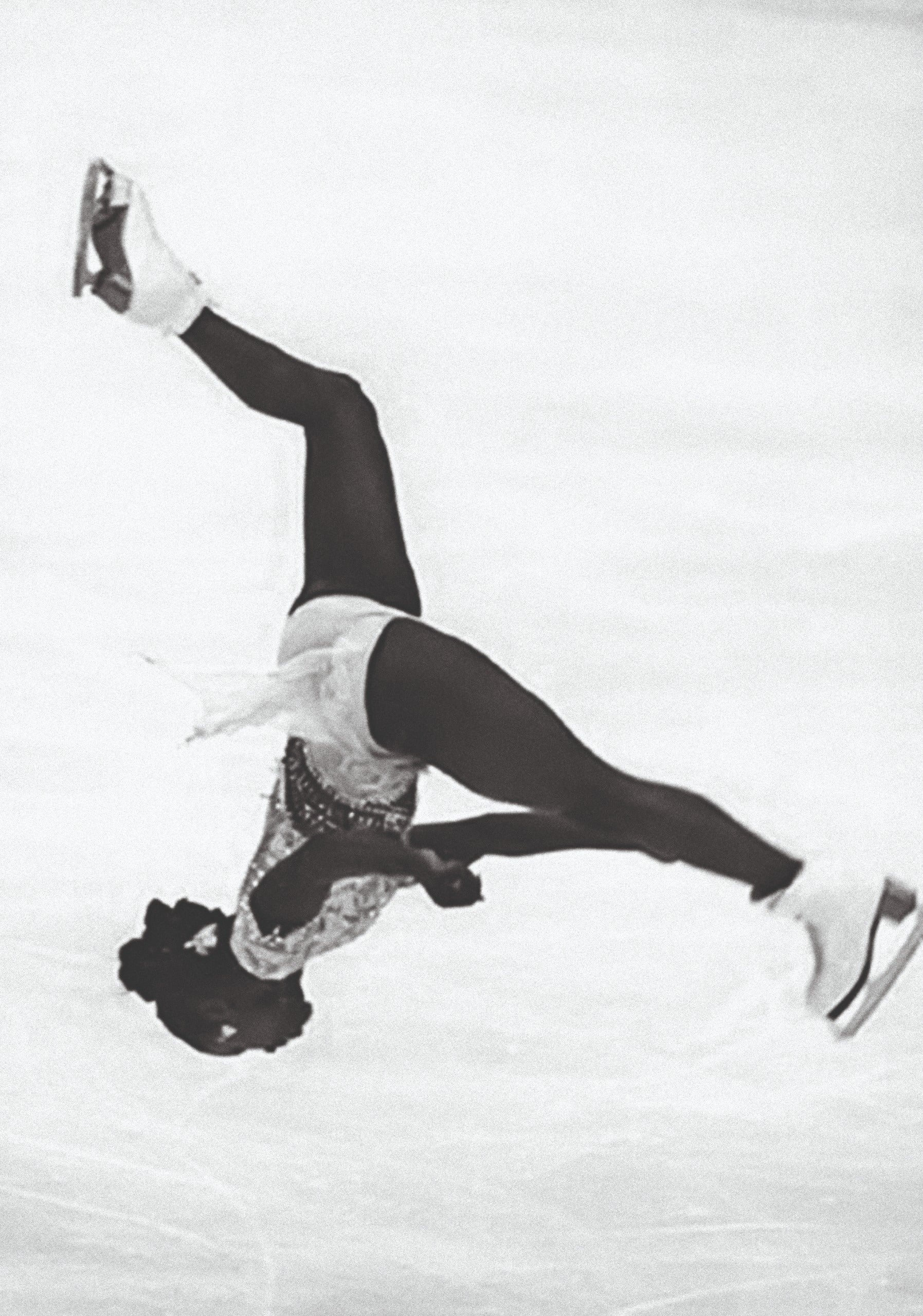
Back_Flip
»Coming in backwards for what looked like a jump, she instead reached her hands back behind her head and leaped. Whipping around, Surya Bonaly landed on one blade — an Olympic first that no one has dared to match. (...) Bonaly slipped to 10th place to end her Olympic career. But the moment quickly became a cultural touchstone. Bonaly was making a statement not only as an accomplished skater, but also as a black athlete in one of the world’s whitest sports.«
Text: Tik Root: Twenty years later, figure skating’s most famous back flip remains amazing (and illegal): https://www.washingtonpost.com/news/sports/wp/
2018/02/22/twenty-years-
later-figure-skatings-
most-famous-backflip-remains-
amazing-and-illegal/?noredirect=on&utm_term=.ff5f3b37be46
Bild: Vgl. https://patinage-
artistique07.skyrock.c2833461078-Surya-Bonaly.html

Lazy_Man
»Modern means of transport such as bicycles and motorcycles were sufficient for the previous footpaths (...). These possibilities were used mainly by Africans (...). (...) Many Germans would still have been carried around in the hammock with four straps or rode on horseback if possible. «
Text: Peter Sebald, Die deutsche Kolonie Togo 1884-1914 Auswirkungen einer Fremdherrschaft, Christoph Links Verlag, Band 14 der Reihe „Schlaglichter der Kolonialgeschichte“, 2013, S.136
Bild: Sofia Mintre, überarbeitetes Fundstück
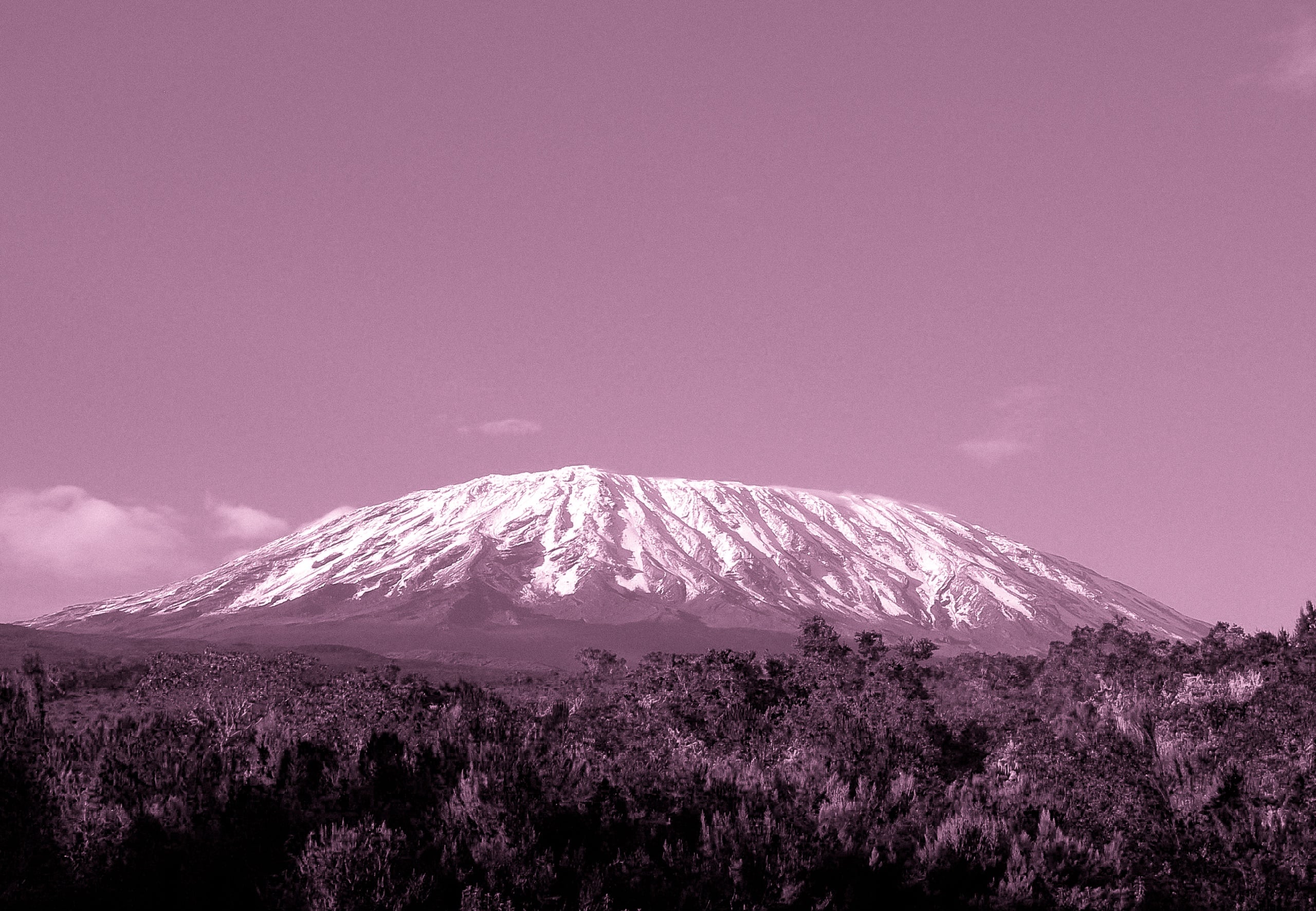
Highest_Mountain
Until the First World War, the »Kaiser Wilhelm peak« of Kilimanjaro was considered the highest point of Germany. As a convinced colonialist, Hans Meyer wanted to set a sign for the alleged strength of Germany and for the alleged German right to colonies with the first ascent by a European.
Text: Vgl. Ludger Lütkehaus, Die Kaiser-Wilhelm-Spitze, https://www.badische-zeitung.de/kultur-sonstige/die-kaiser-wilhelm-spitze--42890477.html; Marc von Lüpke-Schwarz, Als Deutschlands höchster Berg in Afrika lag, https://www.dw.com/de/als-deutschlands-h%C3%B6chster-berg-in-afrika-lag/a-17171342
Bild: Vgl. https://commons.wikimedia.org/w/index.php?curid=1792658
Afrika_Panorama
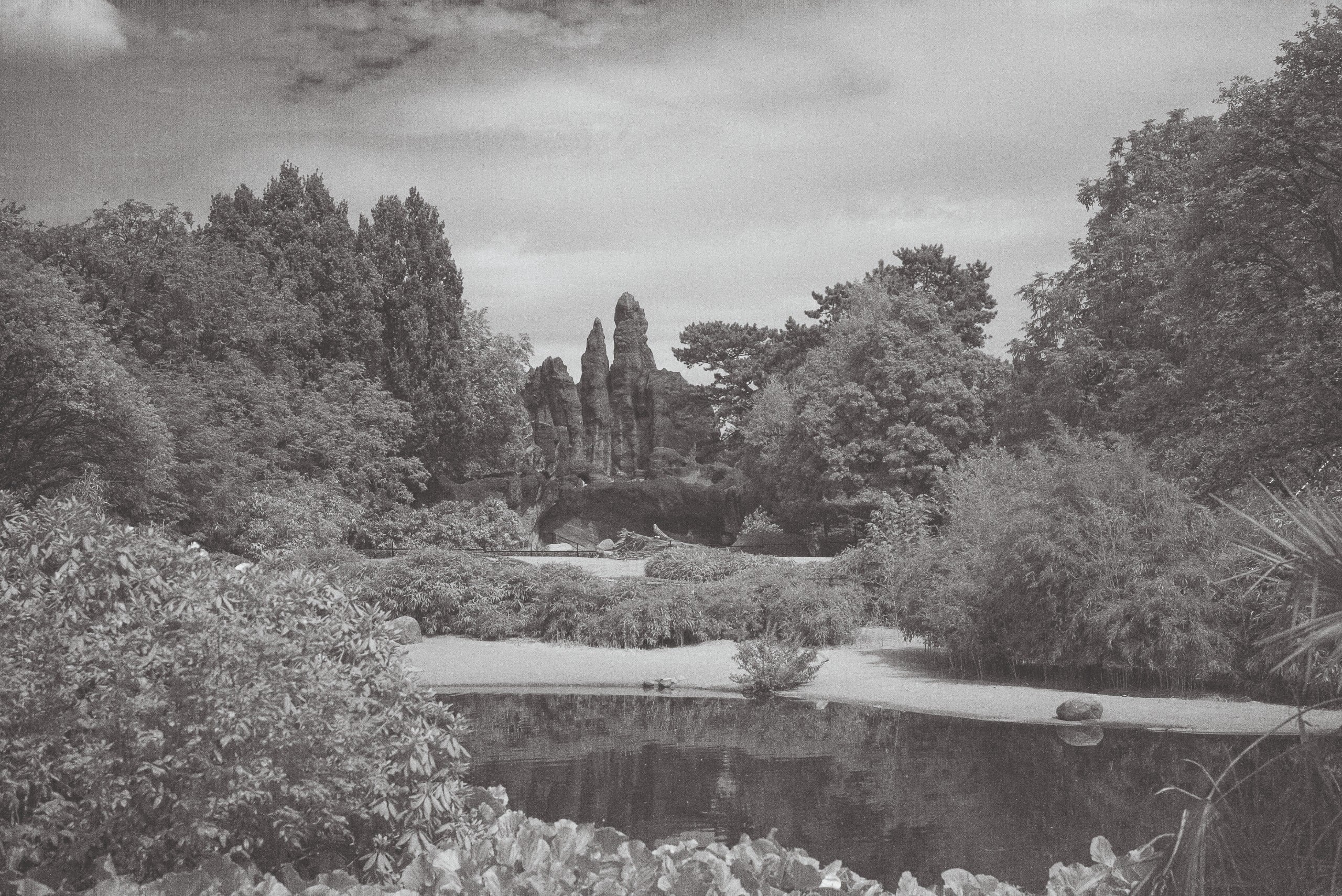
From 1874 until 1931 not only animals but also human beings were exhibited in the Hamburg Zoo »Hagenbecks Tierpark«. Approximaltely 60 of these so called »Völkerschauen« with more than 2000 participants took place. Carl Hagenbeck didn't leave the presentation of »the Others« up to coincidence. He staged the shows and reached record-numbers of more than one million visitors per show. But the »Völkerschau«-groups didn't only succeed because of the amusement, but the people were also used for »scientific research«. This picture taken in »Hagenbecks Tierpark« shows the view on the so called »world known Africa Panorama«.
Text: Vgl. Caroline Schmidt-Gross: Tropenzauber um die Ecke, Völerschauen bei Hagenbeck in: Brantwein, Bibeln und Bananen, Der deutsche Kolonialismus in Afrika - Eine Spurensuche, Heiko Möhle (Hg.), Verlag Libertäre Assoziation, 1999, S.81 - 83 Bild: Sofia Mintre

Renault_5
»When Thomas Sankara came to power in Upper Volta (now
Burkina Faso), the luxury sedans of the previous government were sold and the ministers obliged to take the Renault 5, the cheapest car in Burkina Faso, as their state vehicle. His government team included more women than ever before in an African state, his bodyguards was a women-only unit on motorcycles.«
Text: Lutz van Dijk: Afrika,
Geschichte eines Kontinents, bpb Schriftenreihe Band 1706, Bonn 2016, S.175
Bild: Sofia Mintre, übermaltes Archivbild
His_Story
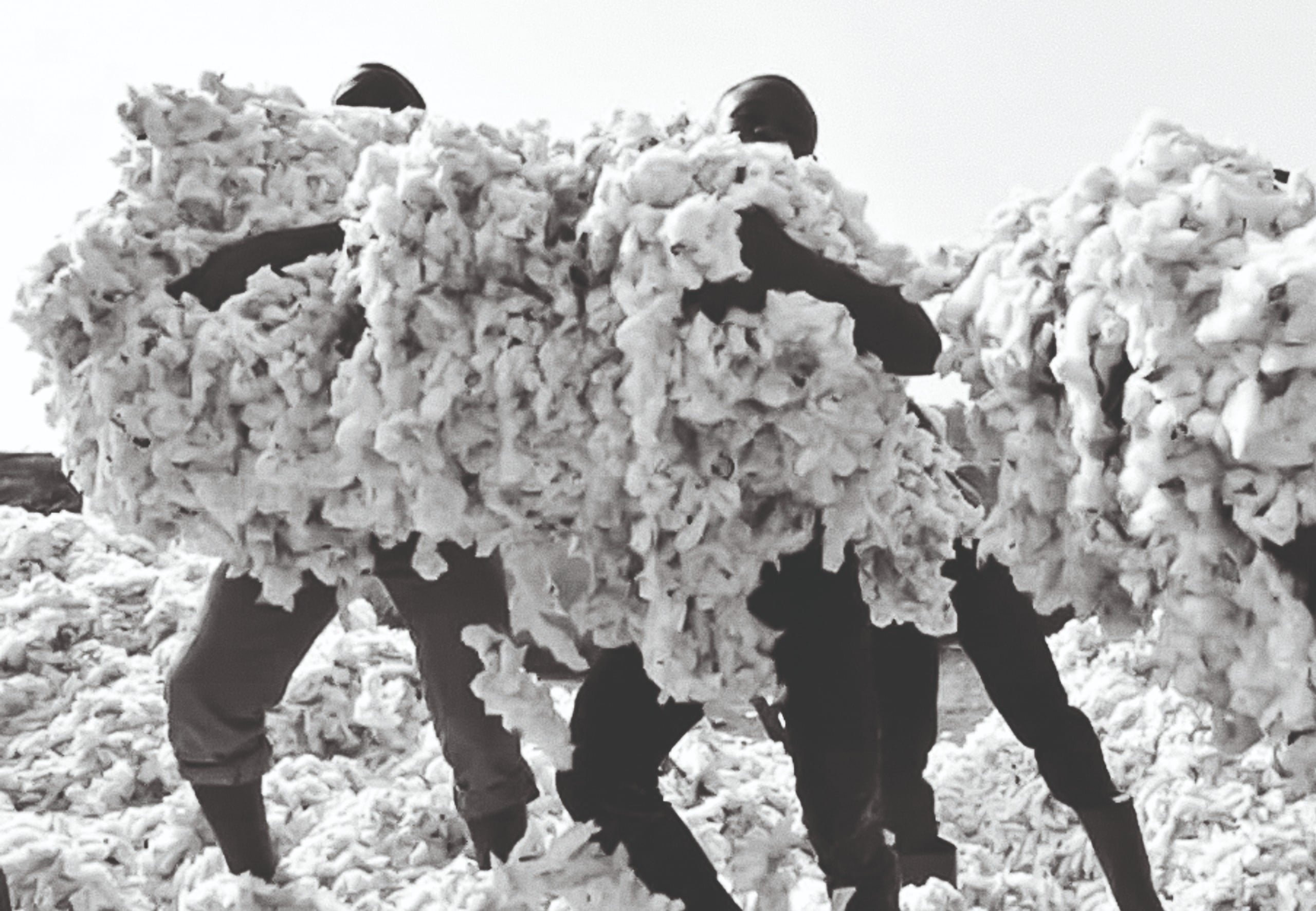
»The sad part of it is that they do not take in consideration our history.(...) I mean, we were sold by white slavers to white people... It is, of course, insulting when they ask ›But where in Africa (are you from)?‹ (...) Neither the white women nor Kathleen know where Kathleen‘s ancestors came from, but they do not know for different reasons. While the white women do not know because they do not have to know (...) Kathleen does not know, not because she does not care, but because she was denied access to her history. There was a fracture, a rupture, that deliberately separeted her from parts of her history.«
Text: Grada Kilomba: Plantation Memories, Episodes of Everyday Racism, Unrast-Verlag, 2. Auflage, April 2010, S. 110-111
Bild: Vgl. https://phys.org/news/2018-05-cotton-harvest-surges-ivory-coast.html

Pippi_Langstrumpf
»The edited version (of a 1969 Pippi Longstocking TV-series) excludes a scene where Pippi plays Chinese by slanting her eyes and Pippi’s mainly absent dad is just a king instead of a ›negro-
king‹. Despite Pippi’s creator, Astrid Lindgren, confessing in a 1970 interview that she should have called Ephraim Longstocking (who, unable to carve out an existence for himself in Sweden, ventured to the Pacific’s, where he immediately became the ruler of a silly-named island populated by brown people) something else, the intervention caused a backlash among Swedes. Many felt their human rights had been trampled on. The word ›censorship‹ was mentioned(...). The closer to home (...) the racism that is being addressed occurs, the more elaborate the strategies for deflection and derailment.(...)«
Text: Katarina Hedrén, Sweden’s love affair with Pippi Longstocking and “definitions” of racism, https://africasacountry.com/2014/12/pippi-longstocking-and-definitions-of-racism
Bild: Sofia Mintre, Collage
Deutsche_Bananen
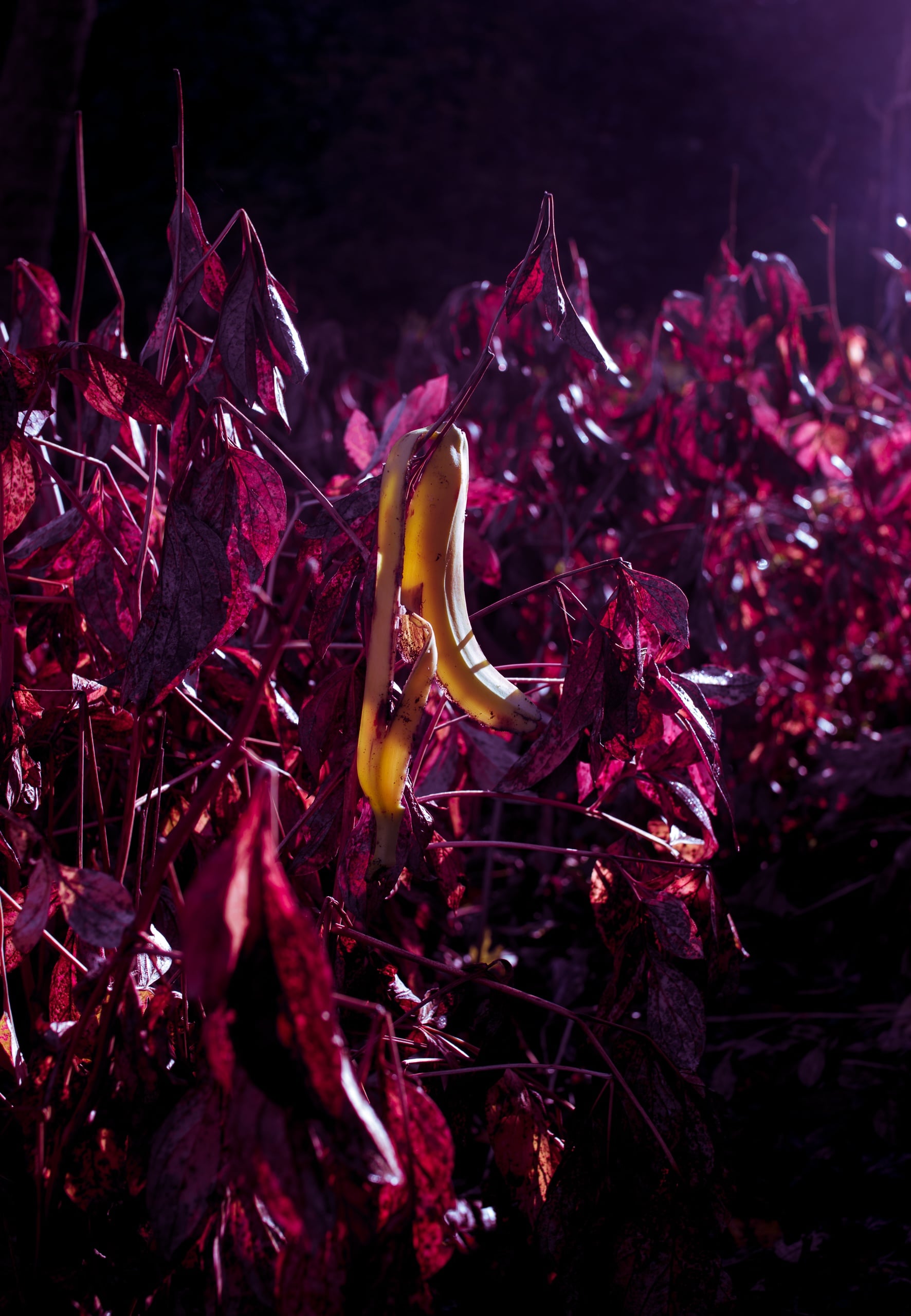
»Eat more German bananas« - with this slogan the Hamburg African Fruit Company (AFC) promoted their colonial goods. It was one of the pioneers in the European banana market at the beginning of the 20th century and established itself with its own reefers and the introduction of branded bananas in almost all European markets. At that time the fruits came from AFC-own plantations in Cameroon, later the AFC also established a banana trade in Central America. The AFC today is still located in Hamburg's old town and is active in the banana business.
Text: Vgl. Karsten Linne: „Deutsche Kamerun-Bananen“ Die Afrikanische Frucht-Compagnie Aktiengesellschaft in: Brantwein, Bibeln und Bananen, Der deutsche Kolonialismus in Afrika - Eine Spurensuche, Heiko Möhle (Hg.), Verlag Libertäre Assoziation, 1999, S.143 ff. Bild: Sofia Mintre
Foto_Fix
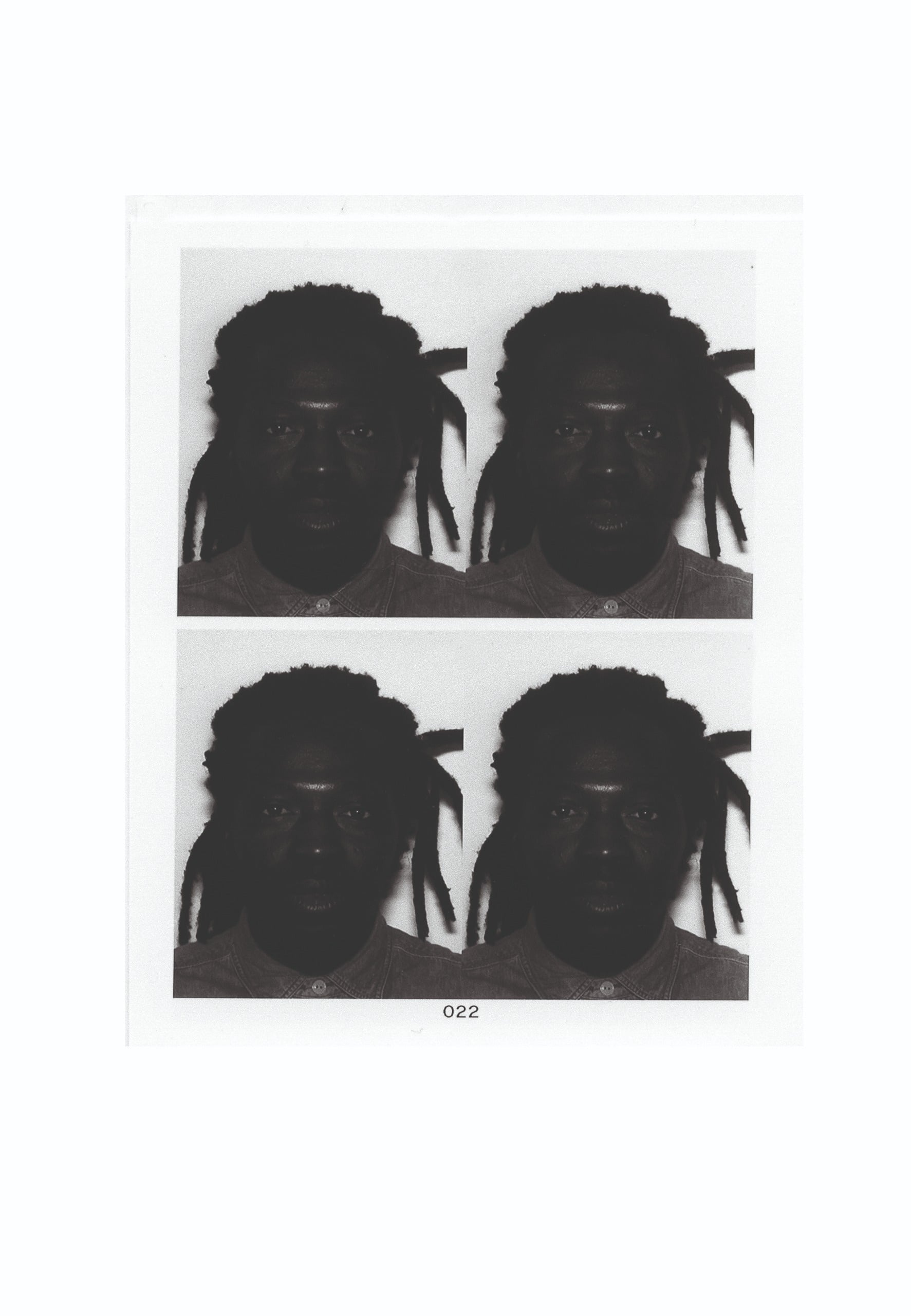
»The clerk finally advised me to go to a photographer. He could adjust the exposure accordingly. I later learned from a friend that he had experienced the same thing five years erlier. With the same passport photo machine and in the same civil office.
Is this a fault in the system or simply a faulty system?«
Text: Sandra Karangwa: Schwarze zu dunkel für biometrische Passfotos in: http://www.migazin.de
/2015/07/13/schwarze-sind-zu-
dunkel-fuer-das-biometrische-
passfoto/
Bild: Scan von Fotofix Passfoto, Hamburger Hauptbahnhof, 2015
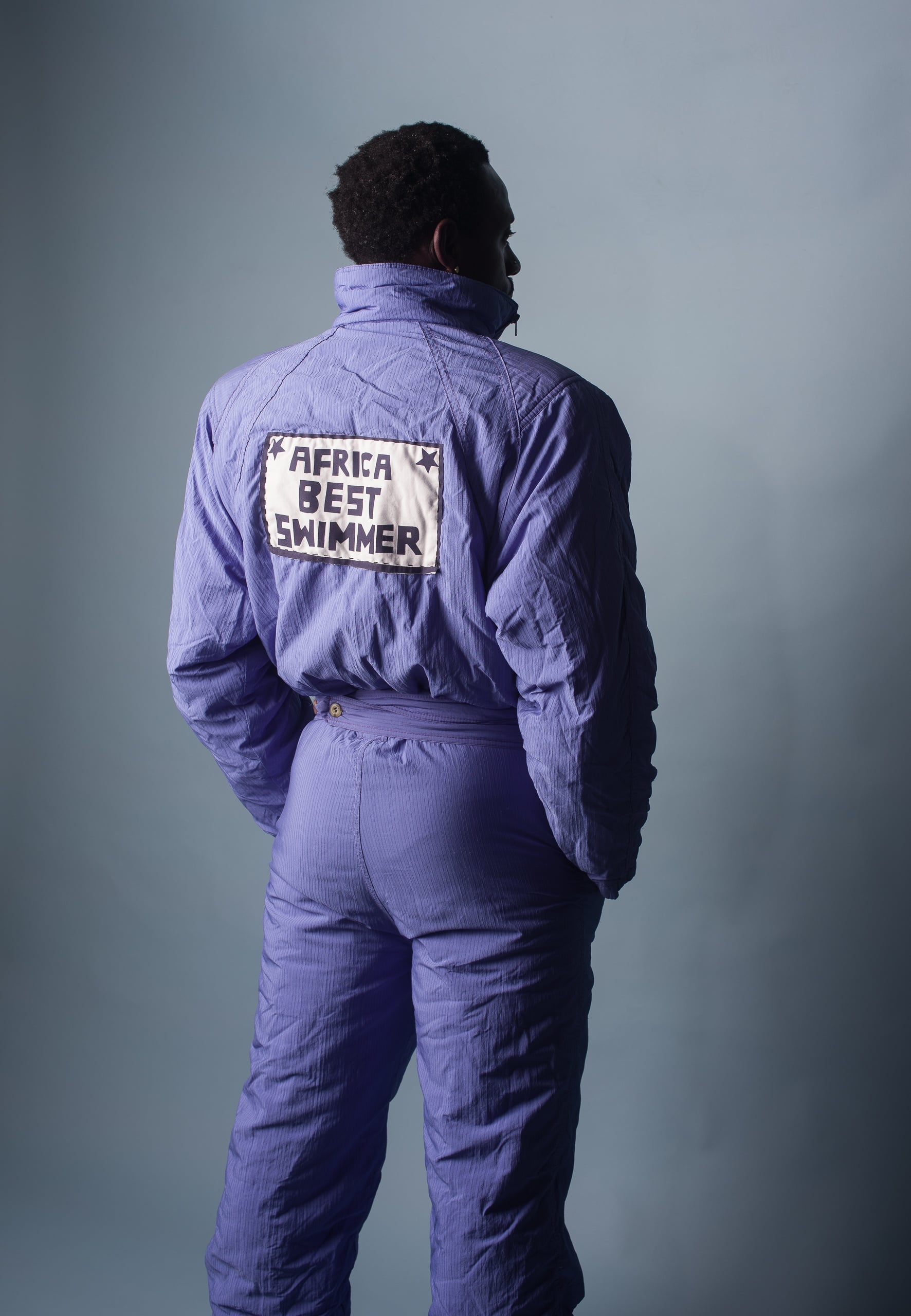
Africa_Best_Swimmer
Adamski Dj Smilyman – an entertainer, musician and artist from Hamburg – sows himself together outfits for various events. He only uses 2-nd-hand-clothing to design them. »I don‘t want to be political with my designs, they are just funny. All I want is to make the people laugh.«
Text: Adamski Dj Smilyman (Adam
Hinnen) im Interview mit Sofia Mintre, 2018
Bild: Sofia Mintre
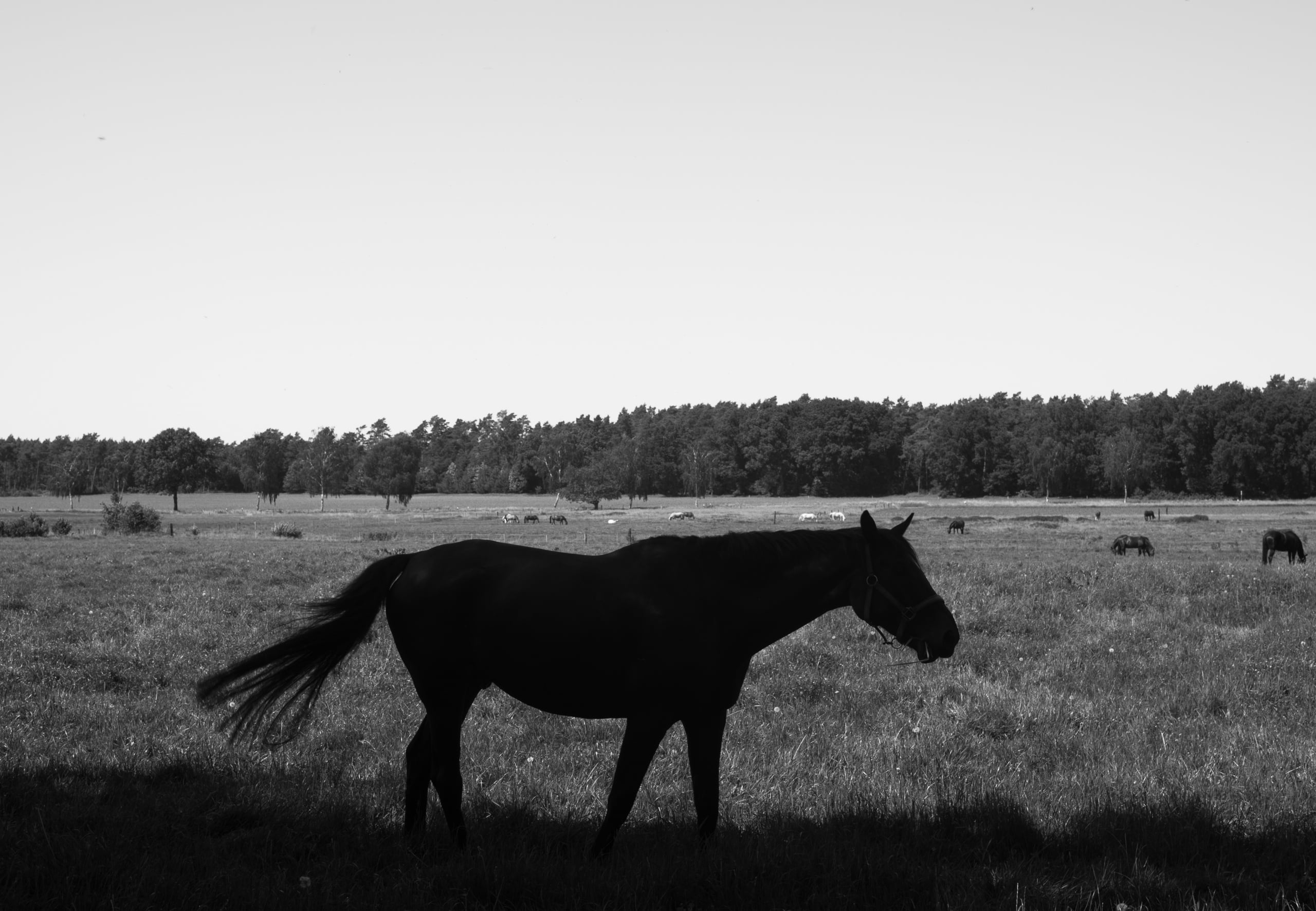
Dark_Horse
»It was only when Kodak´s two biggest clients – the confectionary and furniture industries – complained that dark chocolate and
dark furniture where losing out that it came up with a solution. ›To photograph the Details of a dark horse in low light‹ coded phrase used by Kodak to describe a new film stock created in the early 1980s to address the inability of earlier films to accu-
rately render dark skin.«
Text: David Smith: ‚Racism‘ of early colour photography explored in art exhibition: https://www.theguardian.com/artanddesign/2013/jan/25/
racism-colour-photography-exhibition
Bild: Sofia Mintre
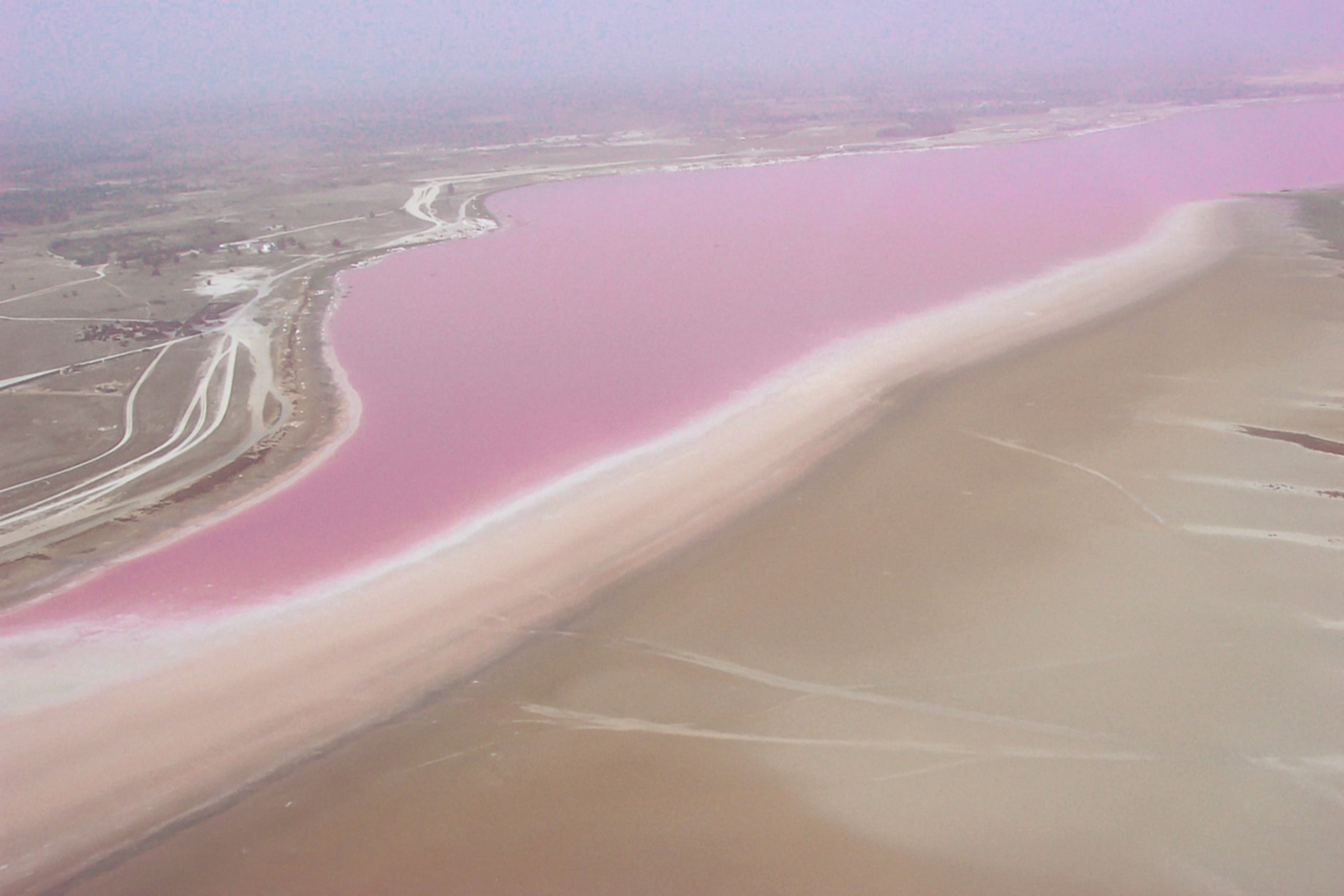
Lac_Rose
» Less than an hour from Dakar, there's a lake in an unusual pink color. The Retba Lake is only separated by some narrow dunes from the Atlantic Ocean. Its salt content is very high.
The striking pink color is caused by the Dunaliella salina bacteria, which are attracted to the salt content of the lake. The bacteria produce a red pigment to absorb sunlight, giving the lake its unique color. «
Text: Vgl. http://www.lakeretba.com
Bild: http://www.travelmagma.com/senegal-travel-forum/don%27t-miss-places-in-senegal/

Gaping_Hole
It is told that this straight cut through the rock at the »Faille de Aledjo« on the route between Sokodé and Kara in Togo was established by the Germans to bring the export goods from the fertile north to the port in times of colonial rule, to be able to exploit the country as efficiently as possible. I have not found any written proof of that, but it is common knowledge in Togo and fit to the image of the Germans those time. Between 1904 and 1911, about 100 000 Africans worked for the expansion of the railway lines — almost half of all able-bodied men. For the administration, every worker was merely a number, that was assigned to them.
Text: Vgl. Peter Sebald, Die deutsche Kolonie Togo 1884-1914 Auswirkungen einer Fremdherrschaft, Christoph Links Verlag, Band 14 der Reihe „Schlaglichter der Kolonialgeschichte“, 2013, S.134 Zitat: Vgl. Buchner, Max: Aurora colonialis, Bruchstücke eines Tagebuchs aus dem Beginn unserer Kolonialpolitik 1884/1885, München 1914, S.57-60
Bild: http://asso-ka-fabah.e-monsite.com/pages/a-la-decouverte-du-togo/page-1.html
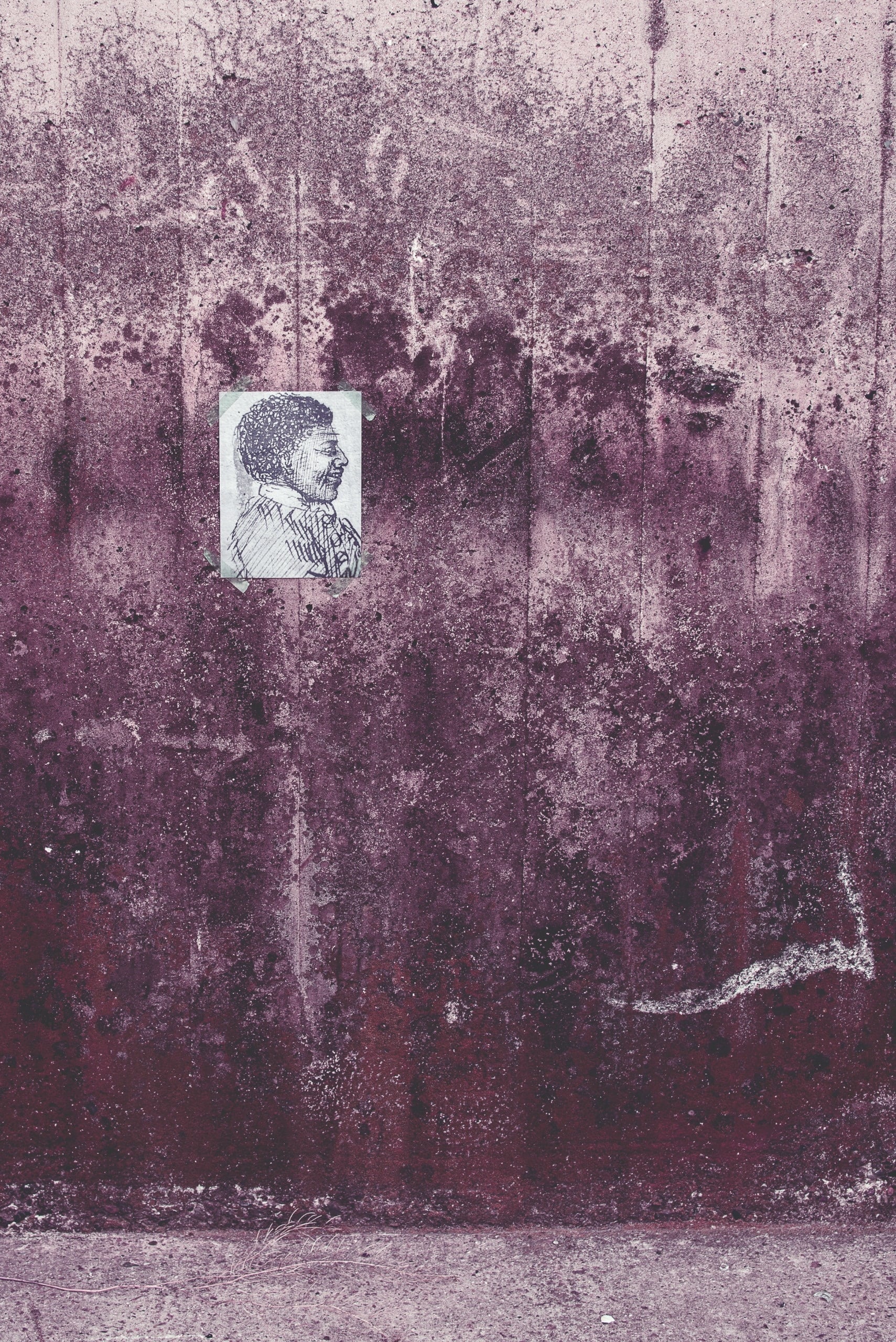
Amo_Afer
Anton Wilhelm Amo Afer was deported 1707 as a 4-year-old boy from the vicinity of Axim, Ghana, and landed as a "gift" with Duke Anton Ulrich of Braunschweig-Wolfenbüttel, as at the time the usual status symbol of the upper class. Amo uncharacteristically enjoyed a humanistic education. He studied Latin, Greek, Hebrew, Dutch and French, later he enrolled at the University of Halle for philosophy and law. Under the title »De iure Maurorum in Euroa« (On the Rights of the Blacks in Europe) he examined the situation of slaves in Europe. Above all, he argued juridical to illustrate the untenability of the illegitimacy of Africans. His disputation has been lost and is still untraceable.
Text: Vgl. Joe Dramiga: Anton Wilhelm Amo Afer, Ein Afrikanischer Philosoph im Deutschland des 18. Jahrhunderts, in: Visionäre Afrikas, Der Kontinent in ungewöhnlichen Portraits, M.Moustapha Diallo (Hrsg.), Bonn 2015, BpB
Bild: Sofia Mintre, mit Archivbild

White_Gaze
For the apartheid regime in South Africa, Polaroid, who had built their cameras for white standards, built an extra »boost« flash so that black faces were clearly visible on the photos. The regime used the blacks' photos for passports to control the black population. When the two Polaroid employees Caroline Hunter and Ken Williams learned of the use of the cameras for taking passport photos, they founded the »Polaroid Revolutionary Workers Movement« in 1970. They demanded to sell Polaroid products to South Africa until the end of apartheid and called for a boycott.
Text: Vgl. Anja Kühne: Kann Technik Rassistisch sein?: https://www.tagesspiegel.de/wissen/
rassismus-in-der-wissenschaft-
kann-technik-rassistisch-sein
/20261290.html; http://african-activist.msu.edu/organization.php?name=Polaroid+Revolutionary+Workers+Movement
Bild: Sofia Mintre, Selbstportrait